

Emergency Roof Leak: 5 Immediate Steps to Stop Water Damage While Waiting for a Roofer
Hearing steady dripping inside your ceiling during a midnight Kentucky thunderstorm is every homeowner’s worst nightmare. When high winds tear off shingles or a snapped tree limb punctures your roof deck, water spreads quickly through attic insulation, ceiling drywall, recessed light fixtures, and hardwood flooring.
The first 30 minutes after discovering an active leak can make the difference between a straightforward roof leak repair ($450 to $1,500) and a devastating $10,000+ interior mold and drywall restoration project.
In this practical emergency action plan, our rapid-response crew at Renewable Roofing Solutions Inc. outlines the exact 5 immediate steps every Kentucky homeowner should take to protect their family, property, and insurance claim while waiting for a licensed 24/7 emergency roofing contractor.
Safety First: NEVER Climb Onto a Wet or Storm-Damaged Roof
Before doing anything else, remember that wet architectural shingles and metal panels are as slick as ice, especially in gusting winds. Lightning, downed power lines, and compromised roof decking pose severe fall hazards. Keep both feet safely inside your home and call (502) 664-8006 for professional emergency tarping.
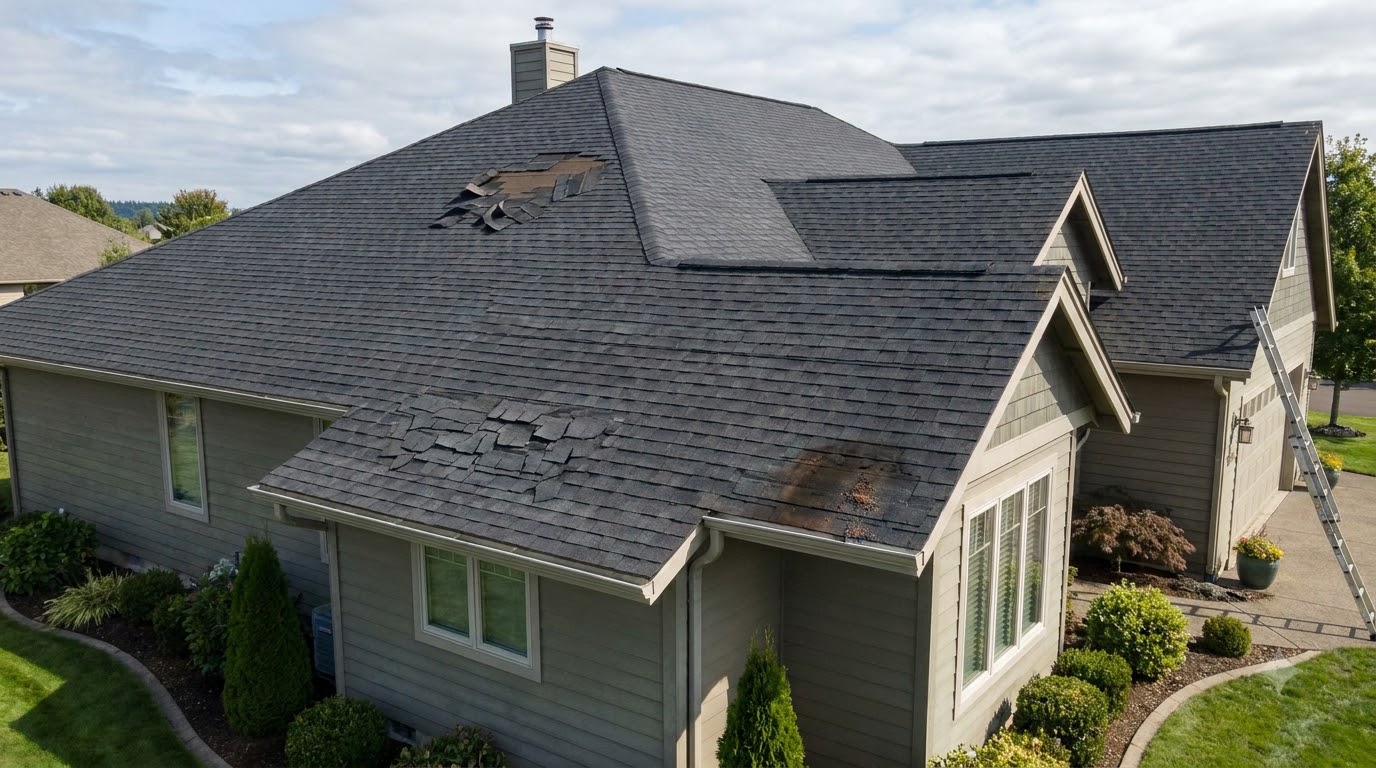
Quick Emergency Action Summary
| Step | Immediate Homeowner Action | Why It Matters |
|---|---|---|
| Step 1 | Clear valuables & shut off affected circuits | Prevents electrical shorts, fire hazards & ruined electronics |
| Step 2 | Set up buckets & stop loud splashing | Protects hardwood floors, baseboards & subflooring |
| Step 3 | Relieve sagging drywall water bubbles | Prevents a sudden full-ceiling collapse onto your family |
| Step 4 | Trace the attic entry & photograph damage | Provides timestamped proof for your insurance claim |
| Step 5 | Call for licensed emergency tarping & mitigation | Satisfies insurance policy duty to prevent further loss |
Step 1: Move Valuables Away & Kill Power to Affected Circuits
As soon as you spot water dripping, discolored ceiling paint, or damp drywall seams, immediately protect your belongings and eliminate electrical risks:
- Clear the Room: Move couches, area rugs, wooden furniture, televisions, computers, and family photos well away from the splash zone. Cover heavy unmovable furniture with plastic painter sheeting or trash bags.
- Shut Off Breakers Immediately if Needed: If water is dripping near recessed can lights, ceiling fans, smoke detectors, or wall outlets, walk to your main electrical panel and switch off the breaker for that room. Water inside live junction boxes can cause dangerous arcing or electrical fires.
Step 2: Contain Active Water Without Letting It Spread
Grab large 5-gallon utility buckets, deep storage totes, or baking pans to catch every drip before it saturates carpets or warps hardwood planks.
- Stop Noisy Splashing: Place an old bath towel or folded rag at the bottom of each bucket so drips hit soft fabric rather than splashing water droplets across nearby walls and floors.
- Lay Down Waterproof Sheeting: Spread plastic drop cloths or heavy shower curtains underneath your buckets so mist and overflow cannot seep between floorboard seams.
- Use the String Trick for Steady Streams: If a thick stream is running across rafters or down a wall line, tape a piece of cotton string at the ceiling entry point and drape it directly into the center of your bucket. Water follows the string smoothly through surface tension.
Step 3: Safely Drain a Bulging Ceiling Bubble Before It Collapses
Sometimes rain pools on top of bedroom or living room drywall before breaking through. If you notice a soft, bulging, downward-sagging bubble in the drywall ceiling, act quickly – trapped storm water weighs 8.3 pounds per gallon and can rip down entire sheets of drywall without warning.
- Position a Large Trash Can or Bucket Directly Underneath: Ensure nobody (including pets or children) is standing below the sag.
- Puncture Only the Lowest Point Gently: Wearing safety glasses and standing off to the side, use a screwdriver, awl, or tip of a broom handle to poke one clean 1/4-inch drain hole at the dead center of the lowest sag point.
- Let Pressure Drain Controlled: Controlled draining releases heavy water pressure into your container, turning a catastrophic drywall cave-in into a small localized patch repair once the roof is fixed.
Step 4: Safely Inspect the Attic & Document Everything for Insurance
If it is safe to step up an attic ladder with a bright flashlight (do not walk off solid ceiling joists onto insulation or drywall!), look upward to see where water is running along rafters and decking.

What to Record Right Now
- Place a Bucket in the Attic Directly Under the Rafter Drip: Catching water in the attic stops it from ruining finished ceilings downstairs. Set the bucket across two solid wooden ceiling joists (or on a spare plank) so weight does not push through drywall.
- Take Clear Timestamped Photos & Short Videos: Record active ceiling drips, wet attic decking, water-stained rafters, and any blown-off shingles visible in your yard from ground level.
- Save Receipts: Keep receipts for tarps, plastic sheeting, dehumidifiers, or emergency shop-vacs. Learn how proper storm documentation helps win full coverage in our Kentucky Roof Insurance Claim Guide.
Pro Tip: Avoid Spray Foam & Temporary Attic Caulk
Do not spray expanding foam or smear roofing tar directly onto wet interior plywood from inside your attic. Sealing water from the underside traps moisture inside OSB/plywood decking, accelerates black mold growth and wood rot, and forces rain to pool sideways into unsealed framing cavities. Leaks must always be sealed on the exterior weatherproof side.
Step 5: Call a Licensed Local Roofer for Immediate Emergency Tarping
Remember that nearly every Kentucky homeowners insurance policy includes a “Duty to Mitigate Further Damage” clause. Leaving an exposed storm opening untarped for days can give insurers grounds to deny secondary interior drywall, flooring, or mold claims.
When you call Renewable Roofing Solutions Inc., our licensed technicians respond fast across Central Kentucky – including Louisville, Elizabethtown, Shepherdsville, Radcliff, and Sonora:
- Heavy-Duty Storm Tarping: We properly secure UV-stabilized reinforced tarps anchored above the ridge crest with wooden furring strips (never careless sandbags or improper nailing that causes new leaks).
- Thorough Root-Cause Diagnostics: Once safe, we inspect pipe boots, chimney step flashing, roof valleys, ridge vents, and storm-creased shingles to stop the leak permanently.
- Full Storm Claim Advocacy: For wind or hail trauma, our storm damage restoration specialists document every impact point for your insurance adjuster meeting.
Most Common Culprits Behind Sudden Roof Leaks in Central Kentucky
Understanding what failed helps homeowners avoid repeated repairs. Across Hardin, Bullitt, and Jefferson counties, 90% of emergency leak calls trace back to five common failure points:
- Wind-Torn or Missing Shingles: Severe thunderstorms break adhesive sealant strips, flipping tabs backward or ripping shingles completely off nails.
- Cracked Rubber Plumbing Pipe Boots: UV sunlight dries out elastomeric collars around roof plumbing vents every 8 to 12 years, letting rain pour straight into bathroom and kitchen ceilings.
- Rusted Chimney & Wall Step Flashing: Separated mortar joints, missing counter-flashing, or corroded valley metal allow high volumes of water runoff inside framing.
- Hail Punctures & Soft Metal Dents: Severe hail fractures fiberglass mats inside older shingles; leaks often appear weeks after the storm passes.
- Overflowing Clogged Gutters & Ice Dams: Water backing up behind leaf-choked gutters or winter freeze-thaw cycles forces moisture upward beneath the first course of shingles along eaves.
Frequently Asked Questions About Emergency Roof Leaks
Should I climb onto my roof during a rainstorm to stop an emergency leak?
No. Wet asphalt shingles and metal panels are dangerously slick, and storm winds can knock you off the roof. Focus strictly on safe interior water containment and call a licensed roofing crew with fall-protection harnesses to install an emergency tarp.
How fast can Renewable Roofing Solutions provide emergency roof tarping in Central Kentucky?
From our headquarters in Sonora along I-65 and US-31W, our emergency response crews serve Elizabethtown, Radcliff, Shepherdsville, Louisville, and surrounding counties with rapid emergency tarping and leak stabilization.
Will homeowners insurance pay for emergency roof leak tarping and storm repairs?
Most standard homeowners insurance policies cover sudden storm damage (such as wind-torn shingles, hail punctures, or fallen tree branches) and typically reimburse reasonable emergency mitigation steps like temporary tarping to prevent further interior damage.
Why is water dripping far away from the damaged spot on my roof?
Water rarely drips straight down from an exterior puncture. Rain entering at a ridge vent, chimney flashing, or valley often runs downhill along roof rafters, sheathing joints, or HVAC ducts for several feet before soaking through drywall.
Have an Active Roof Leak Right Now? Get Fast Help!
Call Renewable Roofing Solutions Inc. (212 E Western Ave, Sonora, KY) for rapid emergency tarping, honest leak diagnostics, and storm damage repairs anywhere in Central Kentucky.